
Last updated March 2026
Magnesium
Fireblood uses magnesium bisglycinate and malate, two highly absorbed forms that replace the cheap magnesium oxide found in most supplements. Each serving delivers 100 mg of elemental magnesium to support energy production, muscle function, and sleep quality.
What magnesium does
Magnesium is a cofactor for ATP production, which means your cells literally cannot produce energy without it. It is also required for protein synthesis, nerve transmission, muscle contraction, and blood pressure regulation.
A 2018 review in Nutrients (Schwalfenberg & Genuis) found that subclinical magnesium deficiency is widespread and connected to cardiovascular disease, type 2 diabetes, osteoporosis, and metabolic syndrome. The problem is that magnesium deficiency doesn’t show up on standard blood tests because only 1% of your body’s magnesium is in your blood. Your body constantly pulls from bones and tissue to keep serum levels stable.
Magnesium also plays a direct role in sleep quality. A 2012 study in the Journal of Research in Medical Sciences found that 500 mg of magnesium supplementation over 8 weeks significantly improved subjective sleep quality, sleep time, and serum melatonin levels in elderly subjects with insomnia. Roughly half of US adults don’t get enough from food alone, according to USDA dietary intake data.
Why the form matters
Most cheap supplements use magnesium oxide. It is inexpensive to produce and lets companies put “400 mg magnesium” on the label. The problem: your body only absorbs about 4% of magnesium oxide. A study published in the Journal of the American College of Nutrition (Firoz & Graber, 2001) found that magnesium oxide absorption was significantly lower than organic forms.
Fireblood uses two forms:
- Magnesium bisglycinate is magnesium bonded to two glycine molecules. It absorbs well, is gentle on the stomach, and the glycine itself has calming properties that support sleep. A 2014 study in Biological Trace Element Research showed glycinate forms had superior absorption compared to oxide.
- Magnesium malate is magnesium bonded to malic acid. Malic acid is involved in the Krebs cycle (cellular energy production), making this form particularly relevant for energy and exercise performance.
Using both forms gives you better overall absorption and covers two distinct use cases: recovery and sleep (bisglycinate) plus energy production (malate).
Signs you might not be getting enough
- Muscle cramps or twitches, especially at night
- Poor sleep quality or difficulty falling asleep
- Feeling tired despite adequate rest
- Increased stress or anxiety without clear cause
- Headaches or migraines
- Craving chocolate (cacao is one of the richest food sources of magnesium)
These are subtle. Nobody walks into a doctor’s office saying “I think I need more magnesium.” But deficiency is common enough that the WHO has called it a public health concern.
How much you actually need
The RDA is 400-420 mg for adult men and 310-320 mg for adult women. Most people get some from food: dark leafy greens, nuts, seeds, and whole grains all contain magnesium. But modern farming practices have reduced soil mineral content, which means food sources aren’t as rich as they once were.
The tolerable upper limit for supplemental magnesium is 350 mg per day (set by the NIH). This limit applies specifically to supplements, not total intake from food plus supplements. The main risk from exceeding it is digestive discomfort, primarily with oxide forms.
Fireblood provides 100 mg per serving. That is a meaningful supplement to your dietary intake without approaching upper limits. If you eat a reasonable diet, the combination of food plus 100 mg supplemental gets most people into the 350-450 mg total range.
What Fireblood includes
100 mg of elemental magnesium from bisglycinate and malate. This is a deliberate choice to supplement your diet, not replace it. We use two forms because they serve different functions and absorb through slightly different pathways, giving you more usable magnesium per milligram.
For a deeper look at magnesium deficiency and what to watch for, read our full article: You’re probably deficient in magnesium (and don’t know it).
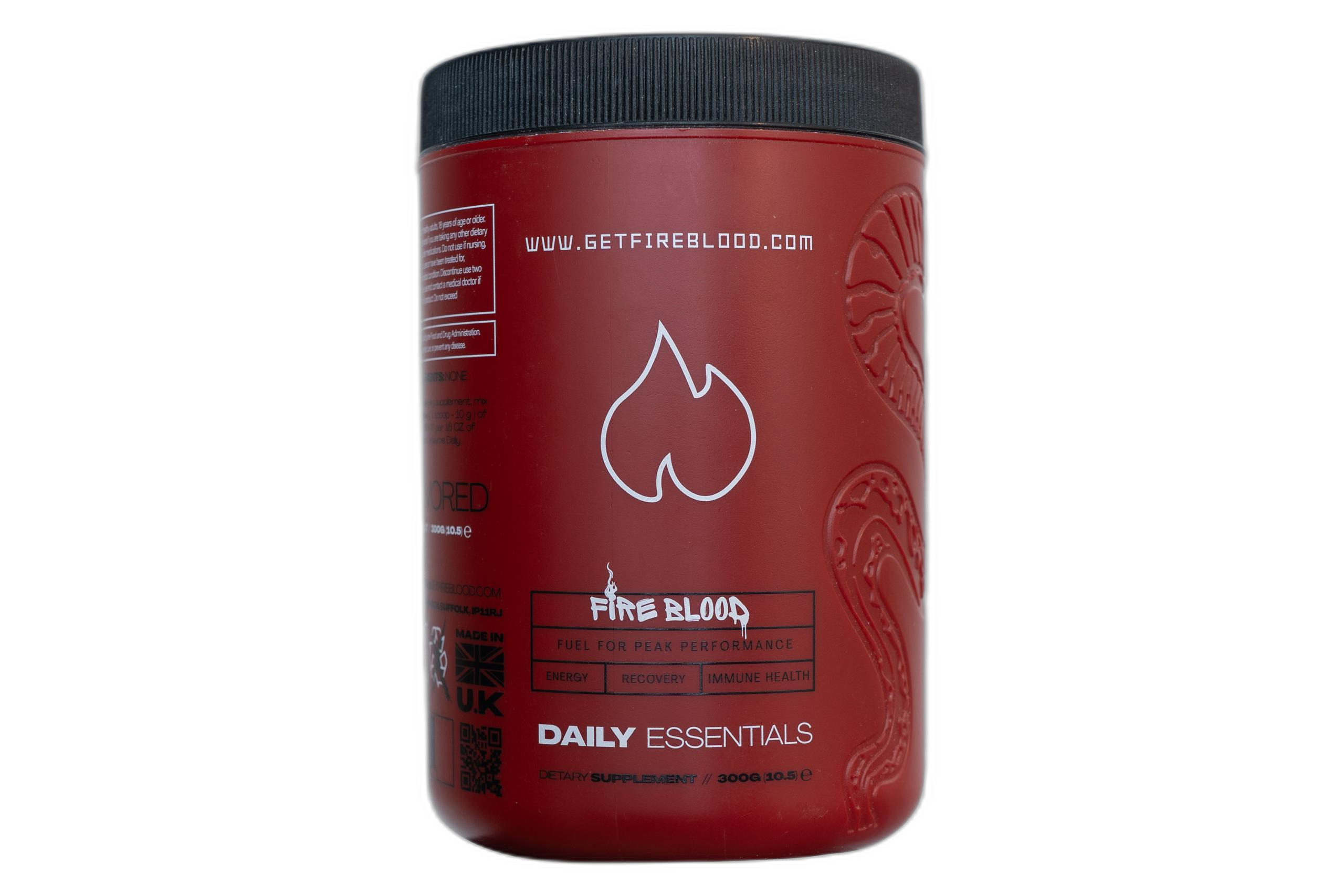
Fireblood includes magnesium alongside 38 other ingredients, all with doses listed on the label. See the full formula.
 See the full formula