
Last updated March 2026
Vitamin K2 (MK-4)
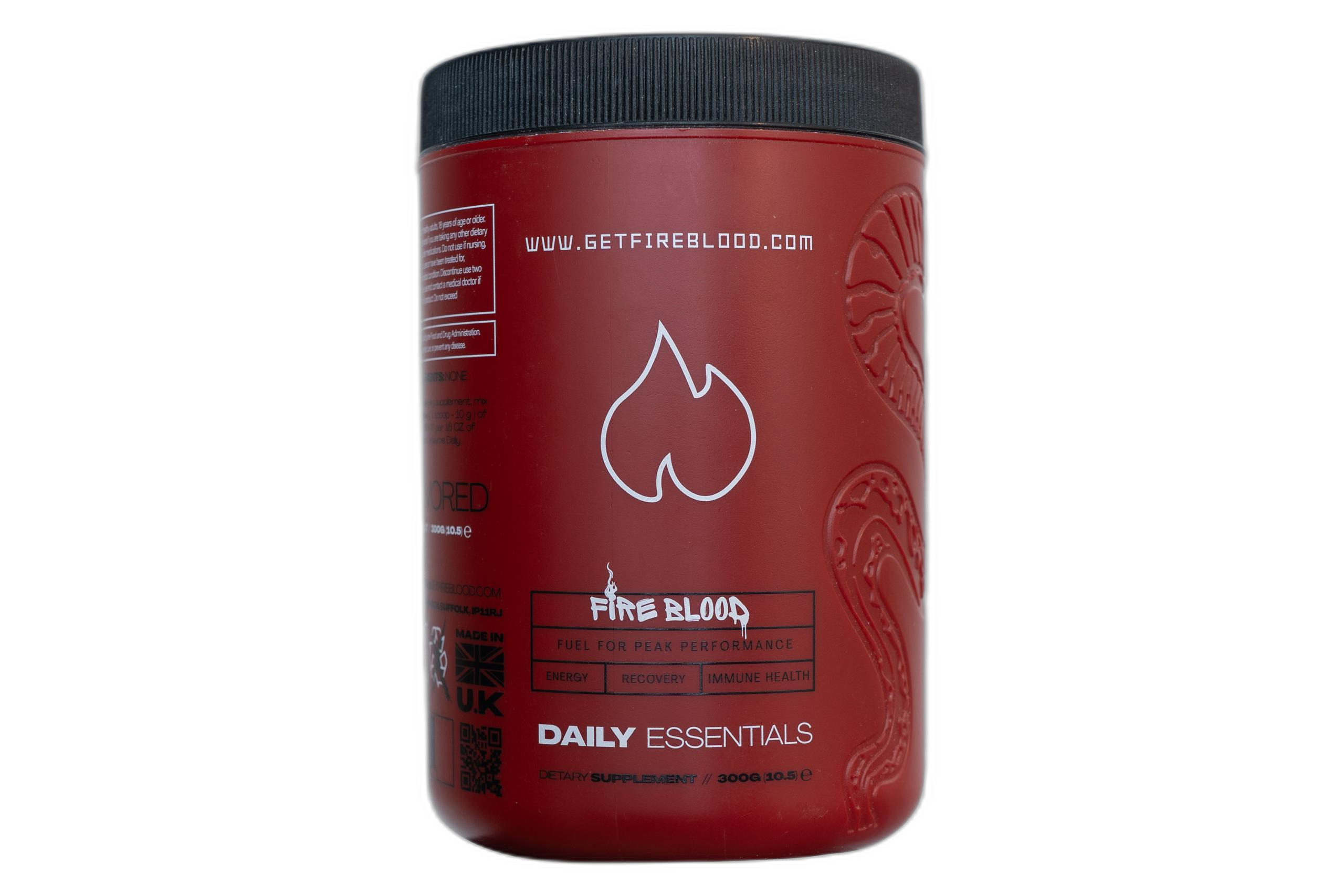
Fireblood includes 120 mcg of vitamin K2 as MK-4, the tissue-native form that directs calcium into your bones and teeth instead of your arteries. Most multivitamins skip K2 entirely, which is a problem if you supplement vitamin D3.
What Vitamin K2 does
K2 activates two proteins that control where calcium goes. Osteocalcin binds calcium into bone tissue. Matrix GLA protein (MGP) prevents calcium from depositing in soft tissues like your arteries and kidneys. Without enough K2, both proteins sit inactive. Calcium drifts wherever it wants.
Geleijnse et al. (Journal of Nutrition, 2004) followed over 4,800 subjects for 7-10 years and found that higher dietary K2 intake was associated with reduced risk of coronary heart disease and arterial calcification. K1, the form found in leafy greens, did not show the same relationship. The two are not interchangeable.
On the bone side, a large Japanese trial (Shiraki et al., 2000, Journal of Bone and Mineral Research) found that K2 supplementation reduced fracture incidence in postmenopausal women. Bone health is not just about getting enough calcium. It is about keeping calcium in the bone once it gets there.
Why the form matters
There are two main forms of K2: MK-4 and MK-7. MK-4 is found naturally in animal tissues, egg yolks, grass-fed butter, and organ meats. Your body also converts some K1 into MK-4 in certain tissues. MK-7 comes primarily from fermented foods like natto.
MK-4 clears from the blood faster than MK-7, but it distributes directly to the tissues that need it: bone and arterial walls. MK-7 hangs around longer in circulation. Both forms activate the same proteins. Fireblood uses MK-4 because it is the form your body naturally produces and uses at the tissue level.
Most multivitamins skip K2 entirely. They include K1, which you can get easily from spinach and kale, and call it done. But K1 primarily handles blood clotting. K2 handles calcium routing. Different jobs, different vitamin. If your supplement label just says “Vitamin K” with no K2 specified, you are missing this benefit.
Signs you might not be getting enough
- Easy bruising or slow wound healing
- Declining bone density or frequent stress fractures
- Arterial stiffness or calcification concerns
- Dental issues, especially weakening enamel
- Supplementing Vitamin D3 without K2 (this combination matters)
How much you actually need
The adequate intake for vitamin K (all forms) is 120 mcg per day for adult men and 90 mcg for women. There is no established upper limit for K2, and toxicity has not been observed even at high doses. Fireblood’s 120 mcg covers 100% of the AI.
Here is what most people miss: if you take vitamin D3, you should be taking K2 alongside it. D3 increases how much calcium your gut absorbs from food. That is its job. But without K2 to route that calcium into bones, it can end up in your arteries instead. Masterjohn (Medical Hypotheses, 2007) laid out this mechanism clearly. D3 and K2 are a pair. Taking D3 without K2 is incomplete at best.
What Fireblood includes
120 mcg of vitamin K2 as MK-4, the tissue-native form. It works directly with the vitamin D3 already in the formula, so the calcium you absorb actually goes to your bones instead of your arteries.
Most multivitamins skip K2 entirely. Fireblood pairs it with D3 because that is how calcium metabolism actually works.
 See the full formula