
Last updated March 2026
Choline (Phosphatidylcholine)
Fireblood includes 100 mg of choline as phosphatidylcholine, the food-form found naturally in eggs and liver. Choline keeps cell membranes intact, produces acetylcholine for memory and focus, and protects your liver from fat buildup. Over 90% of Americans fall short of the recommended intake (Wallace & Fulgoni, Nutrients, 2017).
What choline does
Every cell in your body uses phosphatidylcholine to maintain its membrane. That alone would make choline important. But it is also the precursor to acetylcholine, the neurotransmitter involved in memory, learning, muscle control, and focus. When people complain about “brain fog,” low acetylcholine is often part of the picture.
Choline also helps your liver package and export fat. Without enough of it, fat accumulates in liver cells, which can lead to non-alcoholic fatty liver disease. Choline is a methyl donor that feeds into the same methylation pathways as folate and B12, affecting DNA repair, gene expression, and detoxification.
Wallace and Fulgoni (Nutrients, 2017) analyzed NHANES data and found that over 90% of Americans fail to meet the adequate intake for choline. Not by a small margin. Most people are significantly below the recommended level. The nutrient was only recognized as essential by the Institute of Medicine in 1998, so it still flies under the radar.
Why the form matters
The cheap form is choline bitartrate. It works, but absorption is lower and GI side effects are more common, including the fishy-smell problem that gives choline supplements a bad reputation. A significant portion of choline bitartrate gets converted to trimethylamine (TMA) by gut bacteria before your body can use it.
Phosphatidylcholine is the form found naturally in eggs and liver. It absorbs better because it integrates directly into cell membranes during digestion, and it is gentler on the stomach. Zeisel (Annual Review of Nutrition, 2006) detailed how phosphatidylcholine is the predominant dietary form and the most efficiently used by the body.
Some higher-end supplements use citicoline (CDP-choline) or alpha-GPC. Both are decent options. Phosphatidylcholine is the closest to what you get from real food, and it doubles as both a choline source and a structural phospholipid for your cell membranes.
Signs you might not be getting enough
- Brain fog, poor memory, or difficulty concentrating
- Fatigue that does not improve with sleep
- Elevated liver enzymes or fatty liver diagnosis
- Muscle pain or damage with no clear cause
- You eat few or no eggs (the richest common food source)
- You are pregnant or breastfeeding (choline needs increase significantly)
How much you actually need
The adequate intake is 550 mg per day for men and 425 mg for women. This is an AI, not an RDA, because there was not enough data to set a firm RDA when the guidelines were written. Some people need more, particularly those with PEMT gene variants that reduce the body’s ability to produce choline internally.
Fireblood includes 100 mg of phosphatidylcholine. That is designed to supplement your diet, not replace it. One large egg has roughly 150 mg of choline. Three eggs a day plus the Fireblood dose puts you at about 550 mg. If you eat eggs, liver, or other choline-rich foods regularly, this closes the gap. If you rarely eat eggs or follow a vegan diet, you will likely need more choline from other sources to hit the AI.
What Fireblood includes
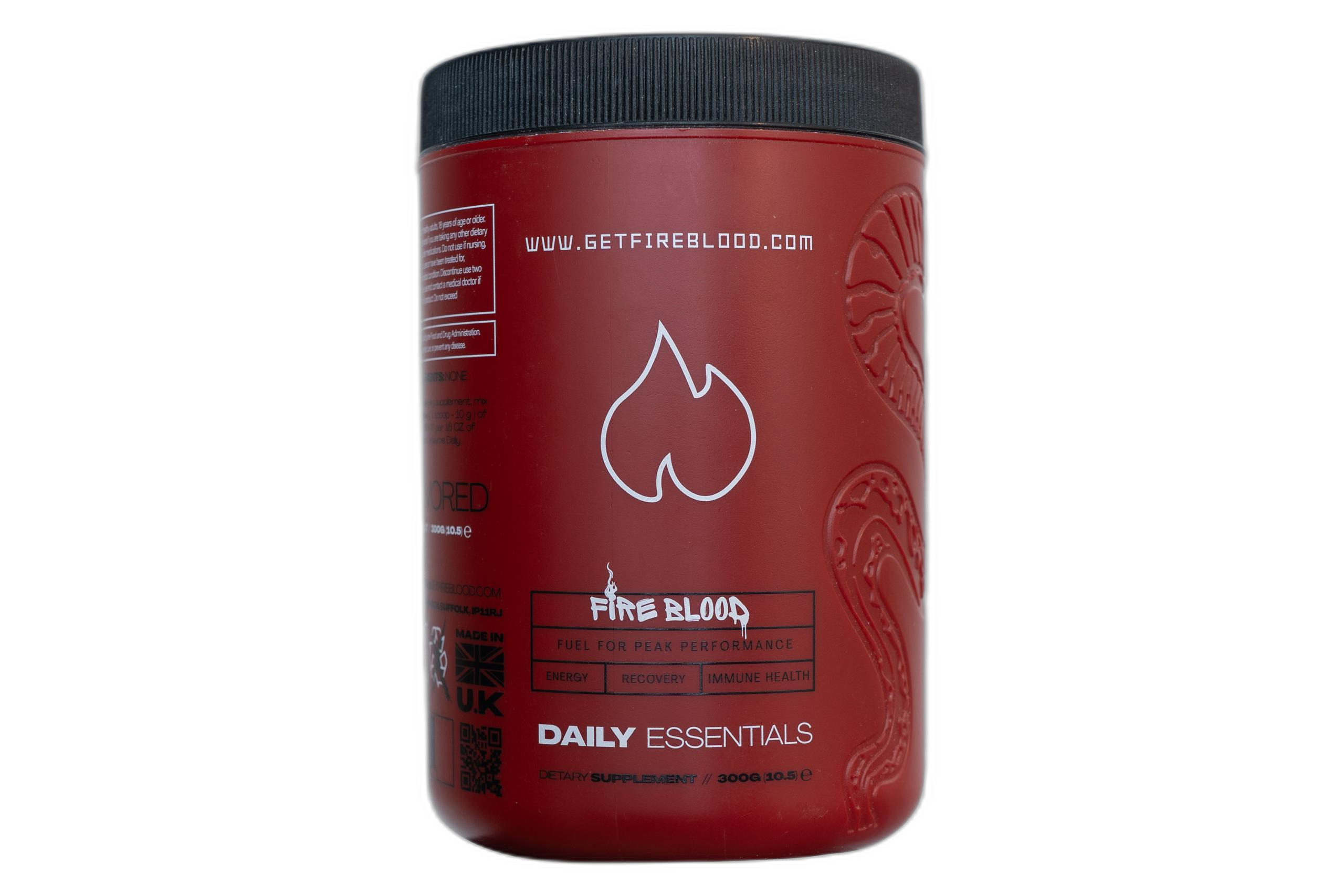
100 mg of choline as phosphatidylcholine, the food-form that absorbs well and skips the GI issues of cheaper choline bitartrate. It works alongside the folate and B12 already in the formula, since all three feed the same methylation pathways.
Over 90% of Americans fall short on choline. Even a partial dose from a daily supplement closes part of that gap.
 See the full formula