Choline: The Nutrient Most People Miss
There is a nutrient your brain and liver depend on every single day, and there is a good chance you have never thought about it. It is not vitamin D. It is not magnesium. It is choline.
Most men who train hard pay attention to protein, creatine, maybe zinc and B vitamins. But choline sits quietly in the background doing work that affects everything from your ability to focus in the gym to how your liver processes fat. And the vast majority of men are not getting enough of it.
What Is Choline?

Choline is an essential nutrient, meaning your body can’t produce enough of it on its own. You have to get it from food or supplementation. It is water-soluble, loosely grouped with the B vitamins, and involved in a surprisingly wide range of biological processes.
Here is the strange part: choline was only officially recognised as an essential nutrient by the Institute of Medicine in 1998.1 Scientists knew about it long before that, but it took decades of research to establish that humans actually need a dietary source of it. Before 1998, the assumption was that our bodies could synthesize enough on their own. They can’t. Studies showed that people fed choline-deficient diets developed liver damage and muscle damage, which reversed when choline was reintroduced.2
So while every other vitamin and mineral had its moment in the spotlight, choline spent most of the 20th century being ignored. That late recognition is a big reason why most people have never heard of it, and why it is absent from most multivitamins and supplement stacks even today.
What Choline Actually Does
Choline is not a one-trick nutrient. It is involved in four major biological functions, all of which matter if you care about performance and long-term health.
Cell Membrane Structure
Every cell in your body has a membrane made largely of phospholipids. The most abundant of these is phosphatidylcholine, which requires choline to produce. Without adequate choline, your body can’t maintain the structural integrity of cell membranes.3 This affects everything. Muscle cells, nerve cells, red blood cells. When you are training and breaking down tissue that needs to be rebuilt, the raw materials have to be there. Phosphatidylcholine is one of them.
Acetylcholine Production
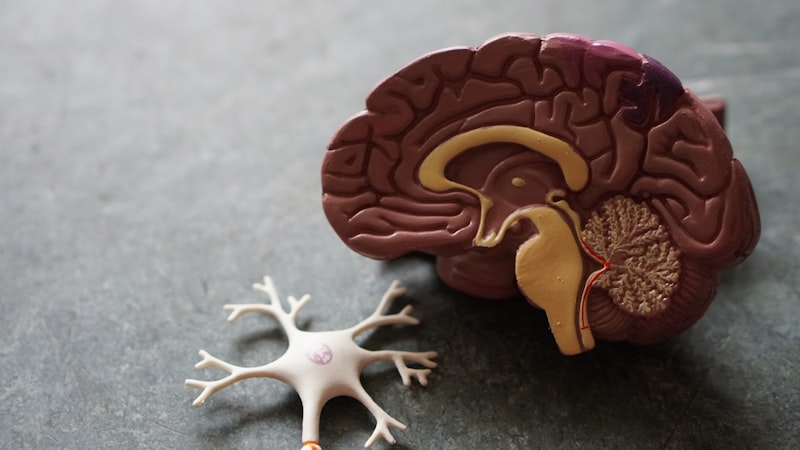
Choline is the direct precursor to acetylcholine, one of the most important neurotransmitters in your body. Acetylcholine is involved in focus, memory, learning, and voluntary muscle contraction.4 Every time you squeeze a barbell or concentrate on your form, acetylcholine is firing across synapses to make that happen.
Low acetylcholine levels are associated with brain fog, poor memory, and reduced muscular performance. If you have ever had days where your mind-muscle connection feels off and you can’t seem to lock in, inadequate choline intake could be a contributing factor.
Methyl Donation and DNA Methylation
Choline is a major methyl donor in the body. Methyl groups are single-carbon units that get attached to DNA, proteins, and other molecules to regulate gene expression and countless metabolic processes.5 This is called methylation, and it is happening billions of times per second in your body right now.
Proper methylation depends on having enough methyl donors available. Choline works alongside folate and vitamin B12 in this system. When choline is low, the burden falls on folate, and if both are low, methylation suffers. Poor methylation has been linked to elevated homocysteine levels, which is an independent risk factor for cardiovascular disease.6
Liver Fat Metabolism
Your liver uses choline to package and export fat as VLDL (very-low-density lipoprotein) particles. Without enough choline, fat accumulates in the liver. This is one of the mechanisms behind non-alcoholic fatty liver disease, and it is directly reproducible in clinical settings. Put someone on a choline-deficient diet and their liver fat increases. Give them choline and it reverses.7
For men who are serious about body composition, this matters. Your liver is central to how your body processes and mobilizes fat. Keeping it functioning properly is not optional.
Most Men Aren’t Getting Enough
The adequate intake (AI) for adult men is 550mg per day.8 That is the baseline, not the optimal amount. And according to NHANES data, roughly 90% of Americans don’t meet it.9
That number is striking. Nine out of ten people walking around with suboptimal choline intake, and almost none of them know it.
The reasons are simple. Choline is not on most nutrition labels. It was not even required on US food labels until 2018. Most people have no idea how much they are consuming, and their doctors are not asking about it either. There is no standard blood test for choline status in routine checkups.
If you are a man who trains, your needs may be higher than the baseline AI. Exercise increases the demand for acetylcholine (muscle contraction), phosphatidylcholine (cell membrane repair), and methylation (recovery processes). You are using more, which means you need more coming in.
Best Food Sources
The richest dietary sources of choline are animal foods, particularly eggs and organ meats.
Eggs are the single best common source. One large egg contains about 147mg of choline, almost all of it in the yolk.10 If you are throwing out yolks, you are throwing out choline. Three whole eggs gets you to about 440mg, which is close to the AI but still not quite there.
Beef liver is the most choline-dense food on the planet, with roughly 350mg per 3-ounce serving. But let’s be honest, most people are not eating liver regularly.
Beef, chicken, and fish contain moderate amounts, typically 70-120mg per serving. They contribute to your daily total but won’t get you there alone.
The math is straightforward. Unless you are eating multiple eggs every day plus a solid portion of meat, you are probably falling short. And if you are someone who skips breakfast or relies on protein shakes and bars for convenience, the gap widens fast.
Why Supplementation Makes Sense
Given the gap between what most men consume and what they need, supplementation is a practical solution. Not because food sources are bad, but because consistency matters more than perfection. You won’t eat three eggs and a portion of liver every single day. Some days you will, some days you won’t. A supplement closes the gap on the days you don’t.
For men who train, the case is even stronger. You are placing higher demands on the systems that choline supports: neuromuscular function, cell membrane turnover, methylation, liver metabolism. Running those systems on insufficient choline is like running an engine low on oil. It still works, but not as well as it should, and the long-term cost adds up.
Choline supplementation has been studied in various forms. Choline bitartrate, phosphatidylcholine from lecithin, alpha-GPC, and CDP-choline all deliver choline to the body. Lecithin-derived phosphatidylcholine is one of the most well-tolerated and widely used forms, with a long safety record.11
How Fireblood Sources Its Choline
Fireblood includes choline in its formula, sourced from soy lecithin in the US version and sunflower lecithin in the UK version. Both are natural sources of phosphatidylcholine, and both have strong safety and bioavailability profiles. The UK formulation uses sunflower lecithin to accommodate allergen preferences in that market.
We include choline because it belongs in any serious men’s health formula. It is not a trendy ingredient. It is not going to be on the cover of a fitness magazine. But it does real, measurable work in your body every day, and most men are not getting enough of it.
The Bottom Line
Choline is essential. Your brain needs it for focus and memory. Your muscles need it for contraction. Your liver needs it to metabolize fat. Your cells need it for structural integrity. And despite all of that, it was overlooked for decades and remains one of the most common nutrient gaps in the Western diet.
If you train hard and expect your body to perform, you owe it to yourself to make sure the basics are covered. Choline is one of those basics.
See what’s inside Fireblood and pick your supply.
References
- Institute of Medicine. Dietary Reference Intakes for Thiamin, Riboflavin, Niacin, Vitamin B6, Folate, Vitamin B12, Pantothenic Acid, Biotin, and Choline. National Academies Press, 1998.
- Zeisel SH, da Costa KA. Choline: an essential nutrient for public health. Nutrition Reviews. 2009;67(11):615-623.
- Li Z, Vance DE. Phosphatidylcholine and choline homeostasis. Journal of Lipid Research. 2008;49(6):1187-1194.
- Hasselmo ME. The role of acetylcholine in learning and memory. Current Opinion in Neurobiology. 2006;16(6):710-715.
- Zeisel SH. Metabolic crosstalk between choline/1-carbon metabolism and energy homeostasis. Clinical Chemistry and Laboratory Medicine. 2013;51(3):467-475.
- Zeisel SH, Blusztajn JK. Choline and human nutrition. Annual Review of Nutrition. 1994;14:269-296.
- Corbin KD, Zeisel SH. Choline metabolism provides novel insights into nonalcoholic fatty liver disease and its progression. Current Opinion in Gastroenterology. 2012;28(2):159-165.
- Institute of Medicine. Dietary Reference Intakes, 1998. Adequate Intake for choline: 550mg/day for adult males.
- Wallace TC, Fulgoni VL. Usual choline intakes are associated with egg and protein food consumption in the United States. Nutrients. 2017;9(8):839.
- USDA FoodData Central. Egg, whole, raw. NDB Number: 01123.
- Blusztajn JK, Slack BE, Mellott TJ. Neuroprotective actions of dietary choline. Nutrients. 2017;9(8):815.