Best potassium supplement for leg cramps: what’s actually going on in your calf
A cramp at 3am is the body shouting. The muscle is telling you something is missing, but the missing thing is rarely one mineral.
Most “potassium for cramps” content stops at “eat a banana.” That answer is wrong in practice. A banana contains roughly 420mg potassium. The adequate intake for adults is 3,400mg for men and 2,600mg for women (NIH Office of Dietary Supplements). A banana covers about 12% of a man’s daily floor. Average intake in the US sits around 2,400mg against that 3,400mg target. Roughly 1,000mg below the line, every single day (NHANES, CDC).
So you take a potassium pill, wait for relief, and wake up cramping again a week later. Here’s why.
What’s happening inside your muscle when it cramps
A skeletal muscle contracts when sodium rushes into the cell, calcium is released from storage, and the muscle fibres shorten. To relax, potassium has to flow out and calcium has to be pumped back into storage. That pump is magnesium-dependent.
When the body runs short on potassium, sodium, chloride, or magnesium, the contract-relax cycle breaks down. The muscle locks.
In English: cramping is not a single-nutrient problem. It’s a pump problem. Four minerals run the pump.
Research on exercise-associated muscle cramps has moved away from the simple “electrolyte depletion” story and toward a model that also includes neuromuscular fatigue (Schwellnus, British Journal of Sports Medicine, 2009). For cramps occurring at rest or during prolonged low-intensity activity, electrolyte status still accounts for the majority of cases. Nocturnal cramps in adults over 40 fit that profile.
Why potassium alone rarely fixes it
Potassium deficiency exists. It’s just uncommon in isolation.
Serum potassium stays surprisingly steady even when dietary intake is low, because the body pulls from intracellular stores to protect the heart. The bloodwork often reads “normal” while the symptoms keep coming. Serum potassium is a weak marker for muscle-level status. 98% of body potassium sits inside cells. The 2% in blood is tightly regulated. The 98% where the cramp actually happens is not what gets tested.
If you’ve been taking a standalone potassium supplement and nothing changed, that’s the mechanism. You patched one variable in a four-variable equation.
There’s also a regulatory ceiling most people don’t know about. The FDA caps over-the-counter potassium at 99mg per tablet. Getting to 1,000mg through pills means swallowing ten of them. The dose you need for actual repletion is in food and in balanced electrolyte formulas, not in standalone tablets.
The most common causes, ranked by likelihood
1. You’re under-hydrated and under-salted. Most adults drink enough water but don’t replace the sodium and chloride lost to sweat, urine, and basic metabolism. Training, sauna, hot weather, high-protein diets, and low-carb diets all increase sodium losses. Low sodium intake in active populations is one of the more consistent triggers of exercise-associated cramping.
2. Magnesium is low. NHANES data shows roughly 48% of American adults don’t meet the magnesium Estimated Average Requirement. Magnesium is the cofactor for the sodium-potassium ATPase pump and for calcium re-uptake. Low magnesium means the pump runs slower, the cramp resolves slower, and the threshold for cramping drops. Low magnesium causes cramps even when potassium looks fine. See our magnesium deficiency guide for the full signal list.
3. Potassium intake is below the AI. Most people consume 2,000 to 2,500mg potassium daily against a 3,400mg target. It’s not a disease, it’s a chronic shortfall. The cramp threshold drops quietly over weeks and months.
4. Chloride is ignored completely. Chloride partners with sodium to maintain extracellular fluid volume. Most chloride intake comes from table salt, so low-sodium diets drop chloride too. The adequate intake for chloride is 2,300mg for US adults (Institute of Medicine).
5. Calcium or medication effects. Rare in well-fed adults. Relevant in the elderly, in lactating women, during rapid weight loss, or when taking diuretics, statins, or certain blood pressure medications.
What to actually do about it
Sleep, food, and hydration come before supplementation. In that order. Then:
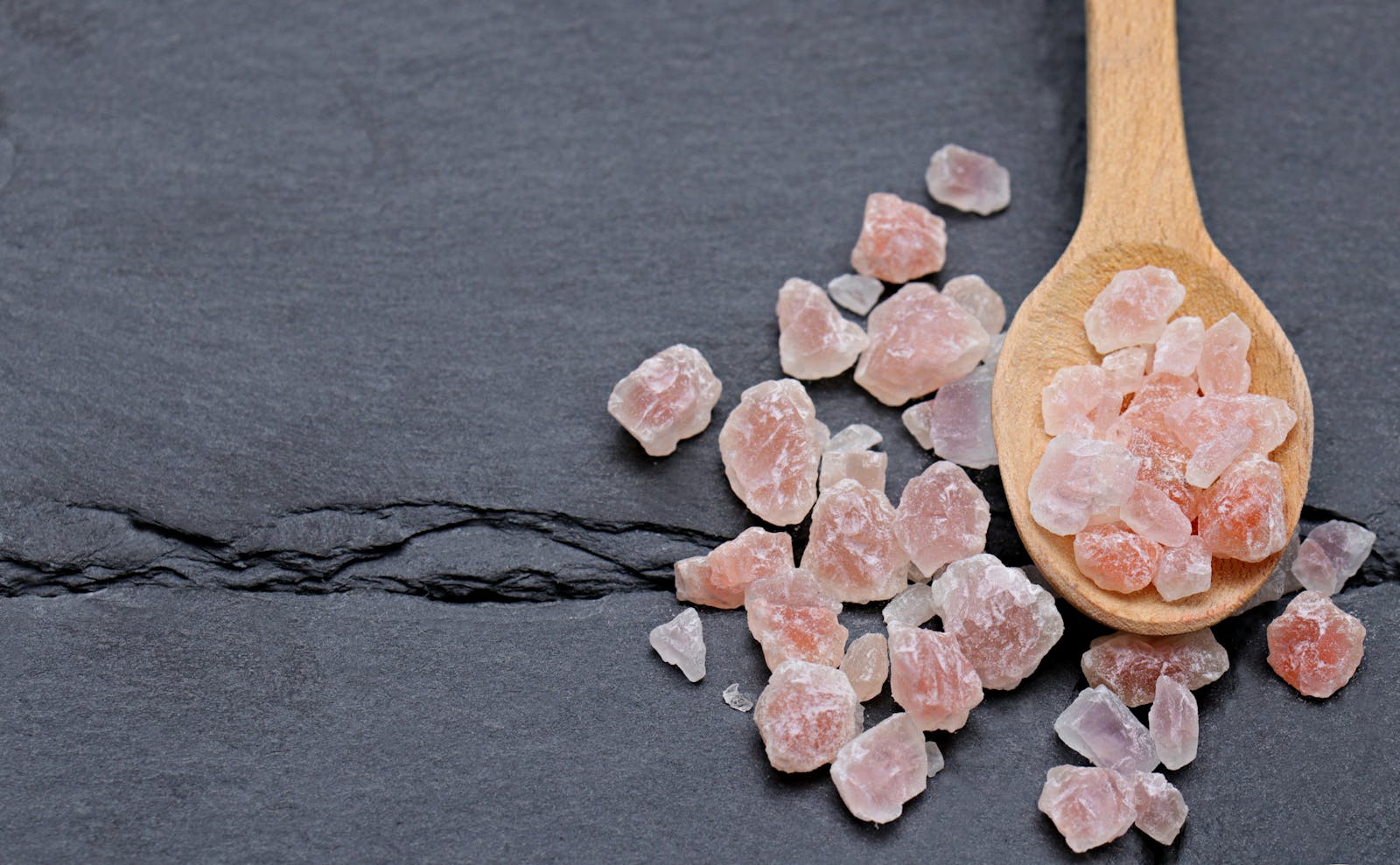
Fix sodium first. Not a sports drink. The sugar and 110mg of sodium aren’t the answer. Pink Himalayan salt in water, or salt on food to taste, with enough intake to hit the healthy range for most men. Under-salting is the easiest variable to correct and usually produces the fastest result.
Fix magnesium before doubling potassium. If you cramp, look at magnesium status first. Serum testing won’t catch most deficiencies. Red blood cell magnesium (RBC-Mg) is the more useful marker. A daily intake of 300 to 400mg magnesium in a well-absorbed form (glycinate or malate rather than oxide) raises intracellular levels over 4 to 6 weeks.
Get potassium from food. Baked potato with skin (about 940mg per medium), white beans (1,190mg per cup), lentils (730mg per cup), avocado (490mg per medium), salmon (490mg per fillet), Greek yogurt (240mg per cup), beet greens (650mg per cup). Three of those in a day moves the number. A banana helps but never rescues a shortfall alone.
Consider the full electrolyte picture. If cramping persists after hydration, salt, and magnesium are dialled in, your daily supplement should cover the base across potassium, chloride, sodium, and magnesium together. Stacking four separate electrolyte pills is how most people end up skipping the stack altogether. See our nutrient deficiency map for the wider picture on what most men are running below.
Fireblood contains 100mg potassium as potassium chloride, 148mg chloride, 40mg sodium from pink Himalayan salt, and 100mg magnesium split between D-magnesium malate and magnesium bisglycinate. One scoop. All four minerals, plus 35 others most men are running low on.
It’s not a cramp cure. It’s the floor most men are running below. Fix the floor, and the cramp threshold moves back to where it should be.
When to see a doctor
Persistent cramping that doesn’t respond to hydration, salt, and daily supplementation deserves investigation. Kidney function, thyroid status, and certain medications can all disrupt electrolyte balance. If cramps are frequent, severe, or accompanied by weakness, palpitations, or unusual fatigue, that’s bloodwork territory.
The short version
A banana won’t fix it. A potassium tablet on its own probably won’t either. Cramping is a systems problem. Hydration, salt, magnesium, and potassium all run the same pump. Fix the ones that are down. Not just the one that’s famous.
Fireblood is a daily micronutrient powder that covers the full electrolyte floor alongside 35 other clinically dosed ingredients. One scoop, one tub, no stack. See what’s in it.